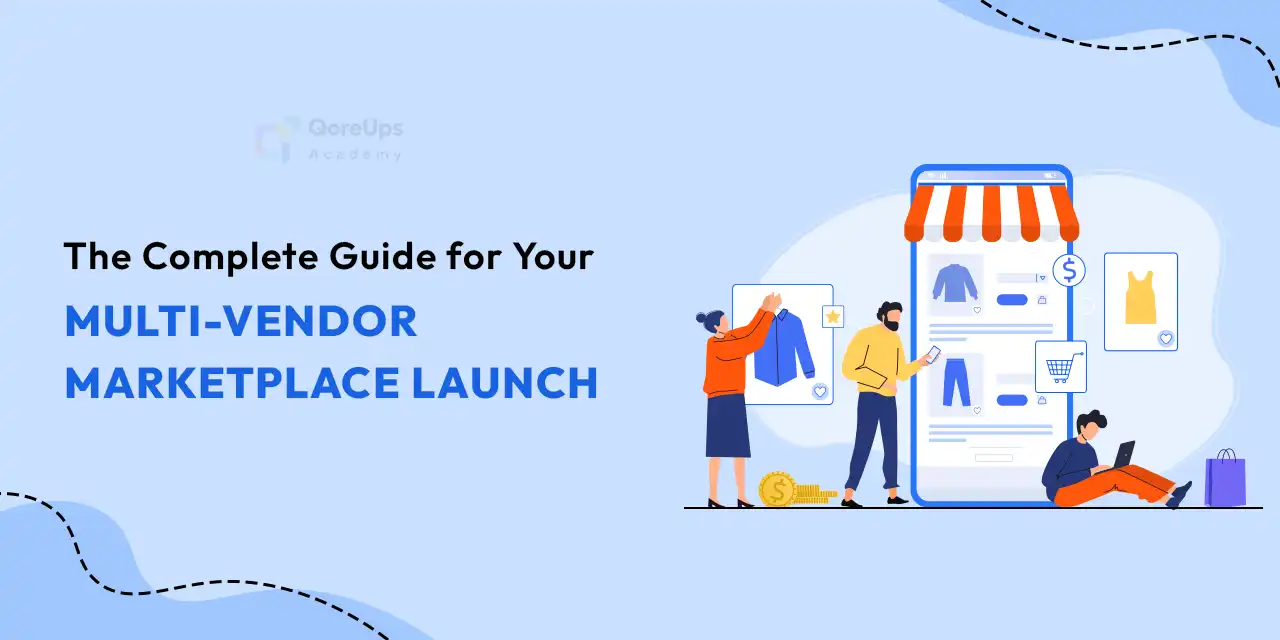
If launching a multi-vendor marketplace has ever crossed your mind, now’s the time to go for it. Wondering why? Here’s some motivation: the global e-commerce market is projected to become a multi-trillion-dollar industry; yes, with a “T.” One thing is certain: there’s a golden opportunity waiting for you.
No surprise you’re reading this, since you’ve got an eye for opportunities.
Starting a multi-vendor marketplace can be an exciting journey, especially with the right multi-vendor marketplace software to help manage vendors, products, and operations. But for first-time founders or businesses expanding their market reach, there are many elements to juggle. With countless decisions to make, it’s easy to get lost in the details and waste both time and money.
That’s why we put together this multi-vendor marketplace startup guide. We will cover every stage of launching a thriving multi-vendor marketplace, from the first idea to growing successfully.
Be sure to read all the way to the end because a special bonus surprise is waiting for you!
Let’s go!
But before we get into the details, let’s set the stage with a strong starting point.
What is a Multi-Vendor Marketplace?
A multi-vendor marketplace is an online space where multiple sellers (vendors) can showcase and sell their products or services, making it easy for customers to browse, compare, and buy in one convenient place.
To make it clearer, you can think of an online marketplace as a farmers’ market.
It works the same way, with multiple farmers bringing their fresh products to a single market. Shoppers can stroll through and see a wide variety of items in one visit, comparing prices and quality as they go. Vendors benefit by sharing the same space and attracting more customers together, while shoppers enjoy the convenience of finding everything they need in one place.
This makes the experience easier and more efficient for everyone involved.
Did you know? According to eMarketer’s Global Shopper Survey 2025, 68.1% of digital shoppers worldwide bought from a marketplace like Amazon or Walmart over the past year.
Interestingly, 20.5% of shoppers now start their product searches on a marketplace instead of a search engine or brand site.
Even with this definition, you might still wonder.
What’s Driving the Growth of Online Marketplaces?
The multi-vendor model keeps growing because it solves three problems at once:
- Buyers get variety and price comparison.
- Vendors get traffic, tools, and payment systems.
- The platform earns without holding inventory.
Of course, we have to mention the elephant that shook everything, COVID. According to Digital Commerce 360, the GMV of the top 100 global online marketplaces was originally projected to reach $3.83 trillion in 2024, up from $2.67 trillion in 2020. Today, estimates are even higher, with figures expected to surpass $3.9 trillion. Lockdowns and store closures in 2020 sparked that initial leap.
I believe that the more buyers turn to the platform, the more sellers list their products, and the more platform owners earn, the stronger the multi-vendor marketplace becomes.
So, let’s turn our attention to what counts: creating a successful multi-vendor marketplace.
The Planning Phase: Multi-Vendor Marketplace Startup Guide
This is where things will get excitingly stressful.
A strong plan helps you launch faster, test ideas with fewer risks, and attract better vendors. No matter whether you’re building a B2C or a B2B marketplace, having that plan in place is essential.
So, let’s walk through how to put that plan together.
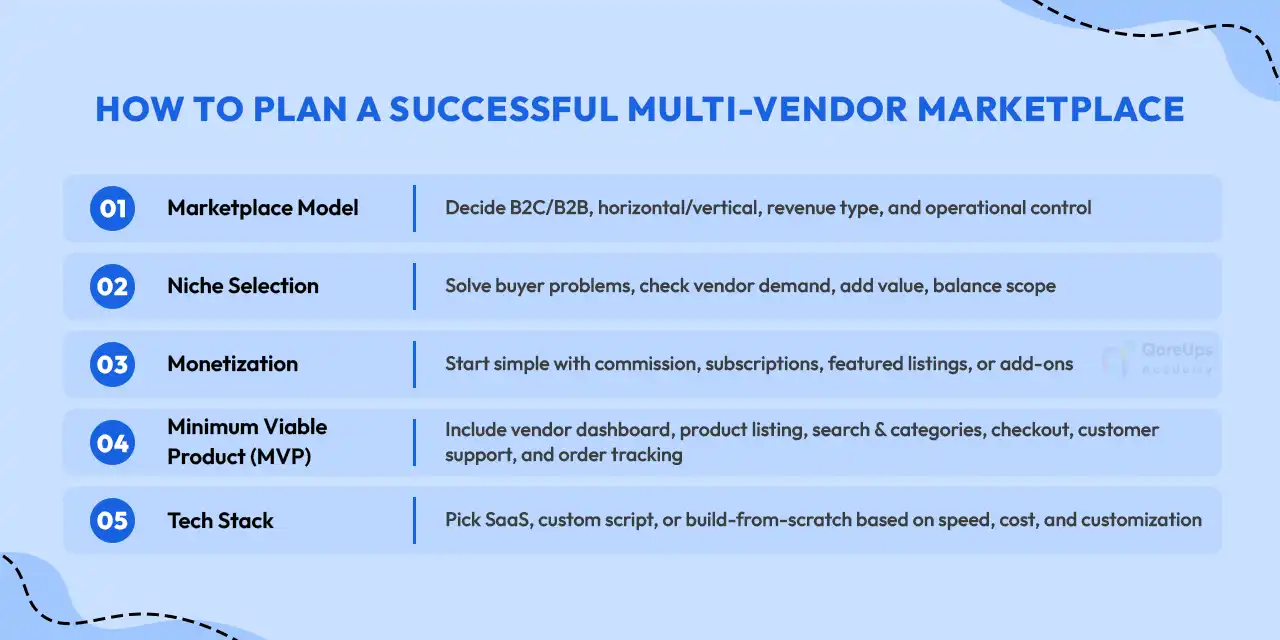
#1. What Marketplace Model Should You Choose?
Choosing your model early is important because it shapes everything else: pricing, features, marketing, vendor workflows, and even legal terms.
Ask yourself:
- What type of market am I entering? B2C or B2B marketplace, or something specialized.
- What structure fits my idea? Horizontal (broad categories) or vertical (niche).
- How do I want to make money? Commission, subscription, listing fees, promotions.
- What level of control do I need? Fully open marketplace, curated vendors, or hybrid inventory.
If you’re just getting started, words like “vertical” and “horizontal” can sound like a whole new language.
Don’t worry, you’ll catch on quickly. Our “What Is a Marketplace Business?” blog makes the concepts easy. Give it a read before moving forward.
#2. How Do You Choose a Niche With Real Potential?
A niche protects you from competing with massive general marketplaces before you’re ready. A good niche:
- Fixes problems buyers face on other platforms.
- Has vendors already been selling similar products.
- Gives you a chance to add real value with service, choosing quality products, or being reliable.
If your niche is too wide, getting customers on board becomes expensive. If it’s too narrow, vendors may not find enough demand. Look for a middle ground with growing demand and underserved buyers.
#3. How to Set Up a Practical Way to Earn from Your Platform
Marketplace monetization often evolves. In the beginning, stick to the basics.
- Common revenue options:
- Commission per sale
- Vendor subscription or listing fees
- Featured listings
- Fulfillment or logistics add-ons
- Advertising space
Start with one or two streams. Later, when you understand vendor behavior and margins, you can introduce more.
Now that the core concept is covered, you might be thinking, “Time to start building, right?”
Not so fast!
These three elements are key to planning, but there’s more to consider, like your tech stack and how to plan your MVP.
Let’s also check out other essentials so that everything makes sense when we start building, making this a complete multi-vendor marketplace startup guide
Now, back to planning!
#4. What Should Your MVP Actually Include?
Just like in sports, where MVP stands for Most Valuable Player, in business, MVP has its own superstar meaning: Minimum Viable Product.
Simply put, it’s the simplest version of your product that you can launch, test your idea, gather feedback, and make it better.
All without losing any of its potential impact.
A marketplace MVP should prove that buyers can find and buy products and that vendors can manage their listings. You don’t need every feature, only the ones that show the core engine works.
Your MVP should include:
- Vendor dashboard
- Product listing and editing tools
- Search and categories
- Checkout and secure payments
- Basic customer support
- Order tracking and notifications
Want to learn more about MVPs? Don’t worry, we’ve got a few tricks up our sleeve. Check out our blog, “7 Tips and Tricks to Build an MVP Platform in 2025”, to see how to choose the right platform and plan your MVP step by step.
#5. Choosing the Best Tech Stack for Your Multi-Vendor Marketplace
Before looking at what the best stack is, you might be thinking, What even is the tech stack?.
Your online marketplace’s tech stack is everything working behind the scenes to keep it running: software, programming languages, databases, and tools that help you build, run, and grow your platform.
Choosing the right technology for your marketplace comes down to three things: how fast you want to launch, how much you want to customize, and how much you want to spend.
Here are the main options:
- SaaS marketplace platforms: Ready-made and fast to launch, with all the technical aspects handled for you.
- Scratch: Build your marketplace from the ground up with complete control, though it can be more time-consuming and costly.
- Custom script: Bespoke marketplace that lets you customize every detail as well as oversee the tech side.
If you’re wondering which tech path is right for building your online marketplace, our blog breaks it all down. Read “Build A Marketplace: SaaS vs Custom Script vs Scratch” to find out.
Planning Part: Done!
Now let’s roll up our sleeves and start building.
Building Your Multi-Vendor Marketplace: Step-by-Step
Think of this stage as turning strategy into working systems. You don’t need everything perfect before launch, but you do need a stable core.
Following the most common method with online marketplace software, we’ll outline the essential steps to build your multi-vendor marketplace. They are:
- Choose the right marketplace platform
- Set up your marketplace (domain & hosting, install software, design site)
- Onboard users
- Create product listings (add listings and organize categories)
- Set up payments and commission system
- Launch and market your marketplace
- Monitor performance and improve
You might be thinking that while these steps make sense, a detailed roadmap would make this multi-vendor marketplace startup guide even more helpful.
If that’s the case, we’ve got you covered. Check out our detailed blog, “How To Build a Marketplace Multi-Vendor: Step-by-Step Guide,” for a complete walkthrough of each step.
With your marketplace now live, the next challenge is bringing vendors and customers on board.
Onboarding Vendors and Customers to Your Online Marketplace
Supply and demand can make or break your multi-vendor marketplace. Many founders stumble at this stage, but with the right approach and a bit of strategy, you can attract your first vendors and buyers and get things moving.
#1. How Do You Attract Your First Vendors?
Begin with vendors who are already active in your niche. They might be local stores, small brands, or online sellers looking for new opportunities. Make the opportunity clear, appealing, and simple for them to join.
For a strong approach, you can
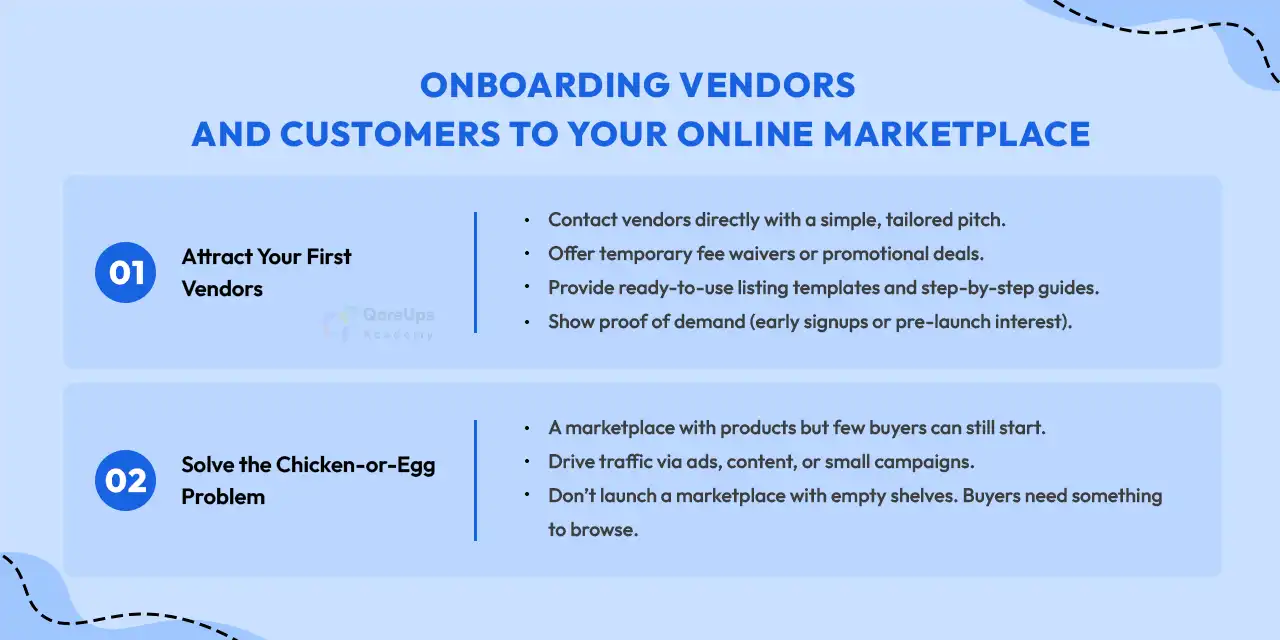
- Contact vendors directly with a simple, tailored pitch that explains the benefits.
- Reduce entry barriers with temporary fee waivers or promotional deals.
- Help vendors get started quickly with ready-to-use listing templates and step-by-step guides.
- Share proof of demand, like early buyer signups or pre-launch interest, to show the opportunity is real.
Suppose you want a focused guide on this topic. You can read our blog, “How To Get Vendors For Your Multi-Vendor Marketplace,” where we lay out vendor acquisition strategies you can use at every stage.
Next,
#2. How Do You Solve the Chicken-or-Egg Problem?
Founders face one of these two fears:
- Vendors hesitate because they want buyers.
- Buyers hesitate because they want products.
Solve the vendor side first. A marketplace with products but fewer buyers can still start. You can drive traffic through ads, content, or small campaigns. But a marketplace with no products gives buyers nothing to explore.
For guidance, you can check our blog on “10 Tactics To Solve Chicken or Egg Problem Of Online Marketplace” to tackle marketplace launch challenges.
You’ve got your plan, platform, and users in place. That’s great for now, but to thrive in the future, you need to keep an eye on 2 things: your growth and the future trends.
Don’t worry, we’re here to help with both.
Download our editable template to monitor your marketplace business KPIs with ease!
Now, let’s focus on building your future success…
What’s Changing in Multi-Vendor Marketplaces: Future Trends
Launching an online marketplace is just the first step. Be it a B2B marketplace linking businesses or a B2C marketplace connecting shoppers, the future belongs to founders who see where the industry is headed.
Several trends are already shaping how the marketplace will continue to do so.
From trends that are already in motion to those that are emerging for tomorrow, here’s what’s shaping the online marketplace.
Smart Searches (Powered by AI)
Amazon leads the way in AI-driven search, using it for personalized results, review highlights, image searches, and dynamic filters. In the coming years, you can also expect more AI automation in the content, like product descriptions.
Niche-Focused Marketplace
Niche marketplaces, like fashion, eco-friendly, or B2B, are growing, with targeted shoppers showing 29% higher conversion than broader marketplaces.
Multi-Channel Marketplaces: From Apps to Social Media
Today’s marketplaces need to reach customers wherever they spend time, whether on mobile, social media, apps, or emerging platforms. Now, some are making it easier to buy directly there or through popular online creators.
Improved Vendor and Customer Support
The next gen demands next‑gen marketplaces that balance vendor efficiency with buyer convenience. So, to thrive in the competitive market, marketplaces must offer smooth payments, easy operations, personalized shopping, flexible options, easy returns, and engaging experiences.
The Marketplace Ecosystem
Marketplaces of the future will go beyond simple buying and selling. In the future, they might also offer help with shipping, setting up products, answering customer queries, and other helpful service bundles.
Ha! Almost forgot… your special gift!
Ever wish there was a guide that walked you through the ABCs of launching your marketplace? Not just an e-book, but an all-in-one e-handbook. If yes, you should definitely make the click.
GRAB your Free Online Marketplace Handbook!
Learn everything from planning, building, and growing your marketplace in a simple, beginner-friendly way.
Conclusion: Make Your Multi-Vendor Marketplace Happen Today!
And with that, we wrap up our complete multi-vendor marketplace startup guide! We hope this guide covered everything you need beyond the basics to launch your online marketplace.
The way you choose your niche, plan your model, design workflows, and support your vendors will determine whether your online marketplace grows or stays still.
And if you feel like you’re in need of a marketplace builder for your multi-vendor marketplace, you know where to find us.
If you enjoyed this, go ahead and share it. And subscribe to QoreUps Academy so we can nudge you when something exciting happens.